The programme offers an integrated curriculum with core modules and electives that combine lectures, guest expert interventions, case studies, group exercises as well as project-based learning – covering sustainability principles, global challenges and procurement, alongside technical pathways in design, engineering and materials.
Participants will engage in interactive sessions, benefiting from diverse perspectives and real-world case applications. Digital tools (BIM, LCA software, databases) are integrated throughout. Teaching emphasizes global-local perspectives and balances theoretical foundations with applied practice.

Industry and academic experts contribute diverse insights, and participants are encouraged to bring their professional experiences into classroom discussions and project-based learning activities. Collaborative and interdisciplinary learning is at the core of the programme’s philosophy.
For a detailed overview of each module available, please see programme modules.
The programme will start in September 2027 with the Sustainability module and registrations will open in March 2027. Please send an e-mail to express your interest and we will let you know as soon as registrations are open.
Programme structure
To obtain the CAS, participants complete:
- The Sustainability module (mandatory, 4 ECTS) — building the shared foundation
- 2 elective modules of their choice (3 ECTS each, 6 ECTS total) — from a catalogue building up to 6 modules, to tailor the programme to their professional focus.
Module workload and time commitment
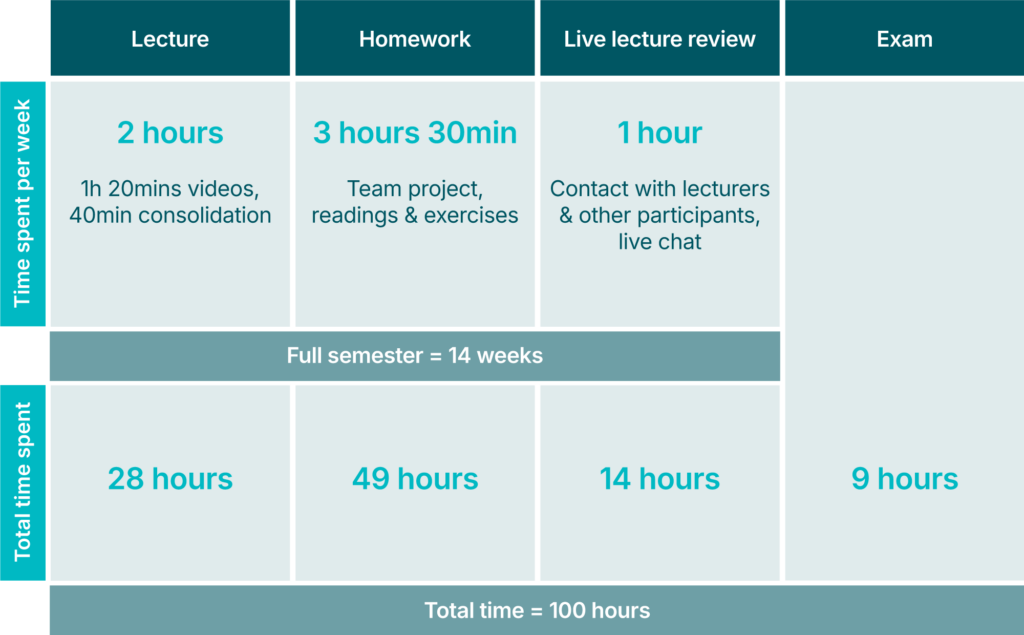
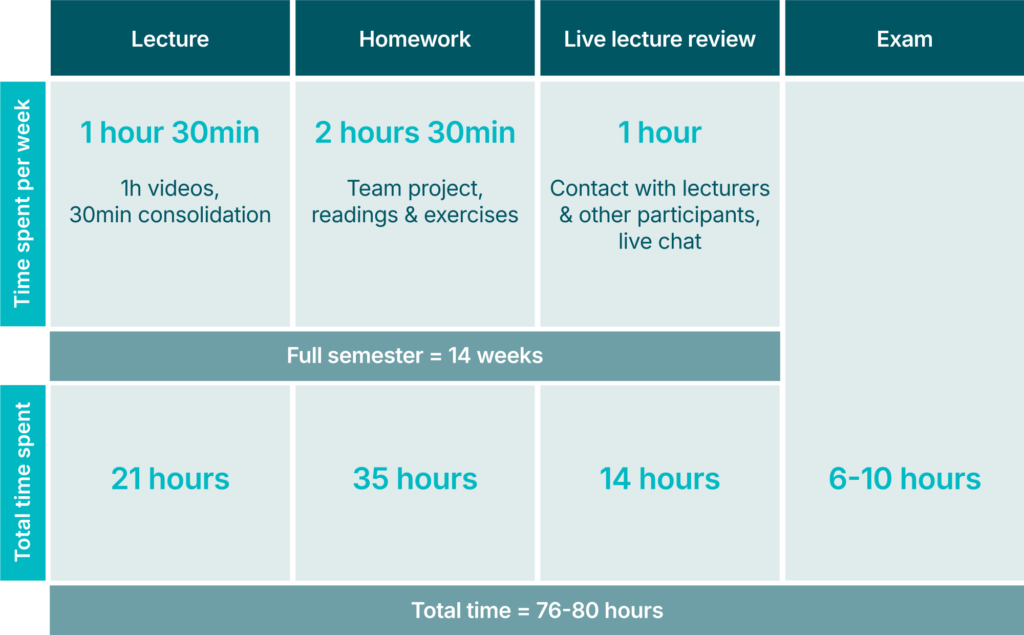
Each module is designed to be manageable alongside professional work. The diagrams below show the typical weekly workload over a 14-week semester, including lectures, homework, live review sessions and exams, as well as the total time commitment for each module.
4 ECTS Sustainability module
Typical workload: 100 hours across 14 weeks.
3 ECTS elective modules
Typical workload: 76–80 hours across 14 weeks.
Eligibility
The programme is open to professionals from a wide range of backgrounds involved in the built environment, including construction, architecture, urban development, public policy, sustainability, and environmental advocacy.
Eligibility criteria:
- A Bachelor’s degree from an accredited university or higher education institution is generally recommended.
- Applicants without a formal academic degree may also be considered. In such cases, the programme management will assess relevant professional experience in a course-related field, sector or role.
This flexible approach ensures access for both academically trained professionals and those with substantial practical expertise from different areas of expertise.

Certification
The Ecole Polytechnique Fédérale de Lausanne (EPFL) jointly with the Ecole Nationale des Ponts et Chaussées (ENPC) will award the Certificate of Advanced Studies (CAS) in Sustainability in the Built Environment to any participant who has validated the required modules and satisfied all evaluation requirements.
Capitalisation
This Certificate is designed to be stackable: credits earned can, in time, count toward a future Master of Advanced Studies (MAS) in Sustainability in the Built Environment.